The physical top of a fast-food counter must survive relentless abuse: thermal shock from hot food trays, impact from dropped point-of-sale hardware, chemical degradation from industrial sanitizers, and constant friction from sliding trays and coins.
The Baseline: Stainless Steel
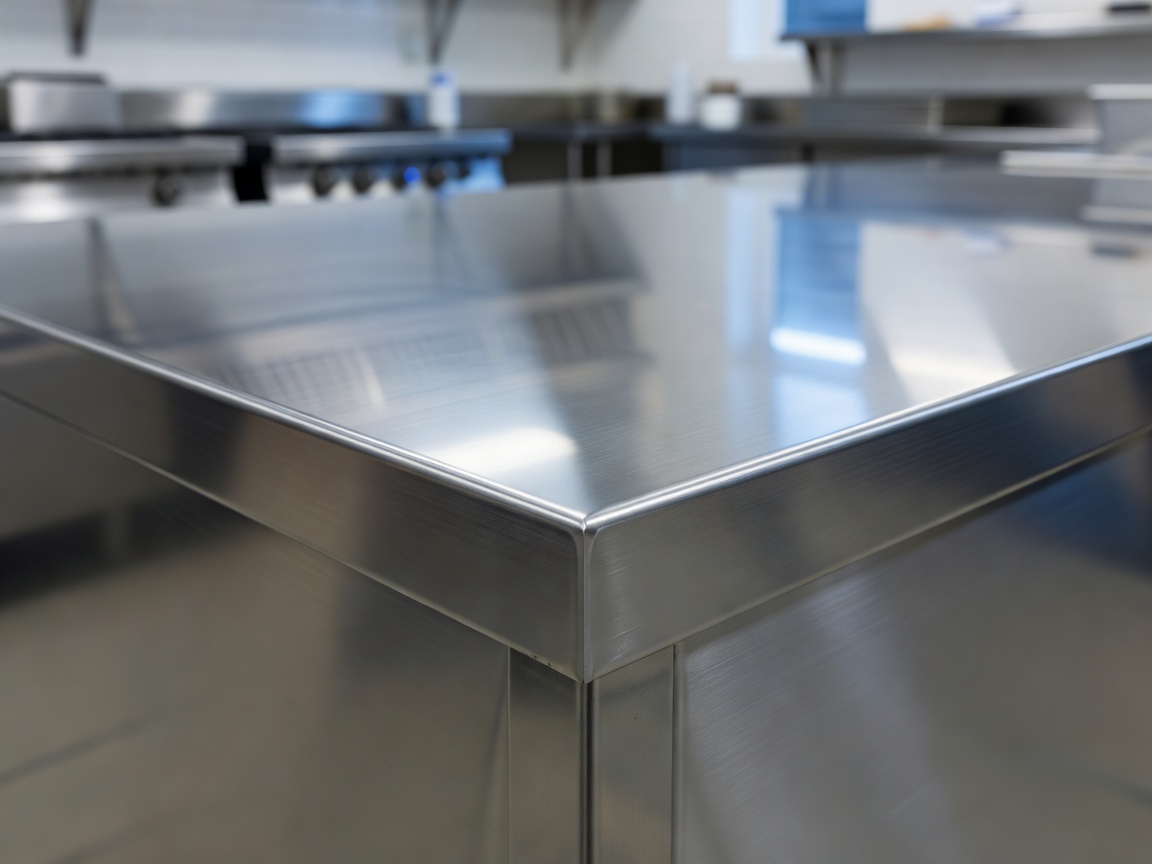
In back-of-house operations, stainless steel is ubiquitous. However, not all grades are suited for front-of-house counters. When specifying stainless steel for high-traffic transaction areas, the alloy grade and thickness (gauge) dictate longevity.
- 304 Grade Stainless: The industry standard for commercial food equipment. It contains higher levels of chromium and nickel, providing excellent resistance to corrosion and oxidation. It will not rust when exposed to mild acids (like tomato juice or citrus) or harsh cleaning chemicals.
- 430 Grade Stainless: Often used as a cost-saving alternative, 430 grade contains lower nickel content. It is more prone to pitting and corrosion over time, making it inappropriate for wet zones or high-friction areas.
- Gauge Matters: A 14-gauge or 16-gauge sheet (which is thicker than the higher-numbered 18 or 20 gauge) is required for front counters to prevent "oil-canning"—the warping and popping sound metal makes when pressure is applied.
Solid Surface Materials
Often referred to generically by brand names like Corian, solid surfaces are composed of acrylic or polyester resins blended with mineral fillers (typically alumina trihydrate). This material is highly favored in fast-casual concepts for its aesthetic flexibility and seamless integration.
The primary advantage of solid surface materials is their homogenous nature. The color and pattern run entirely through the material. If a deep scratch occurs, it can be sanded and buffed out on-site, restoring the counter to its original finish without requiring replacement. Furthermore, solid surface pieces can be chemically welded together during installation, creating entirely seamless expanses that prevent the accumulation of bacteria and grime.
Engineered Quartz
Engineered quartz consists of roughly 90-94% crushed natural quartz aggregates bound together by polymer resins. It mimics the appearance of natural stone (such as marble or granite) but vastly outperforms it in commercial food environments.
Unlike natural stone, engineered quartz is completely non-porous. It does not require annual sealing to prevent staining, and it is highly resistant to both scratching and microbial growth. However, it is rigid and brittle compared to solid surface materials; a heavy impact on a sharp corner can cause chipping, which requires specialized epoxy repair kits rather than simple sanding.
Material Comparison Table
| Material | Scratch Resistance | Heat Resistance | Repairability | Relative Cost |
|---|---|---|---|---|
| 304 Stainless Steel | Low (scuffs easily) | Extreme | Difficult (requires polishing) | $$ |
| Solid Surface (Acrylic) | Medium | Moderate (scalds at 212°F+) | Excellent (sandable) | $$$ |
| Engineered Quartz | High | High | Poor (requires epoxy fill) | $$$$ |
Edge Profiles and Impact Resistance
The leading edge of the counter receives the most impact from belt buckles, handbags, and service carts. Specifying the correct edge profile drastically extends the life of the counter.
A sharp, 90-degree squared edge is prone to chipping in stone and quartz, and causes discomfort for employees leaning against it. A "bullnose" (fully rounded) or "eased" (slightly softened corners) edge diffuses impact force. Furthermore, applying a marine edge (a slightly raised perimeter) can prevent liquid spills from cascading over the front of the counter onto the customer floor, controlling slip hazards.